
Last week, I didn’t post a list of things I’ve recently found interesting, as I typically would. Mostly because I couldn’t extract myself from the rabbit hole of interesting things that I was deep in.
Before we get started, did anyone else find this video ‘unveiling’ to be unsettling, a little spooky and not at all comforting? Thanks IBM.
I’ve been researching the world of AI for a while now. And attempting to be fairly systematic about it. I read a lot of research papers on AI, machine learning and so on.
Reading the research papers is helpful. A lot of times when you listen to a talk on AI or a presentation of some new development, there’s an assumption of an already acquired background of knowledge. Someone might drop in convolution neural networks, or discuss the value of a BERT model. And I find I can just about keep up and learn faster if I’ve taken the time to read some of the research papers behind all this activity. Which gives me a veneer of background knowledge with which to listen to the experts. Keep in mind, I’m neither a scientist or computer scientist. I’m sure there are a lot of gaps in my acquired knowledge.
Last week I read the 2013 paper from DeepMind Technologies scientists: Playing Atari with Deep Reinforcement Learning. It wasn’t as mind-blowing to me as the SERNN paper I’ve mentioned previously, but it must have been really interesting ten years ago. The paper introduced a new deep learning model for reinforcement learning. Their method achieved better performance than an expert human player on Breakout, Enduro and pong. I don’t believe this was the first introduction of Q-learning but showed a clear advancement of the learning method. You may, if you were paying attention to the OpenAI drama of late, noticed something about the secretive Q* project which had some employees alarmed. I think it’s worth knowing what the background work is on Q Iteration.
(There’s an interesting 2005 paper on Q Iteration and Reinforcement Learning here: https://github.com/seungjaeryanlee/implementations-nfq/blob/master/paper.pdf)
A lot of my interest in AI came from studying the concept in Physics and Neuroscience of the Free Energy Principle and Active Inference. The physics described in how the brain works could be instrumental in building Artificial General Intelligence. Karl Friston, the UK Neuroscientist professor who developed the Free Energy Principle is a generous speaker and interviewee on the topic. You can come across countless videos of him discussing Active Inference and FEP. And often, like my comment above, many of the discussions are kind of technical, between two physicists and thus skipping fast over topics they don’t need to dwell on. Which can leave you with more unanswered questions that you began with.
However, I came across one of his colleagues, Dr Thomas Parr being interviewed by not a physicist but, well, someone happy to ask dumb questions. And Dr Parr is wonderfully smart and articulate. As well as patient. And the brain surgeon interviewing did an excellent job asking all the questions people tend not to. I hope you enjoy this introduction to what I believe will become an increasingly important discovery.
Something different but no less creative.
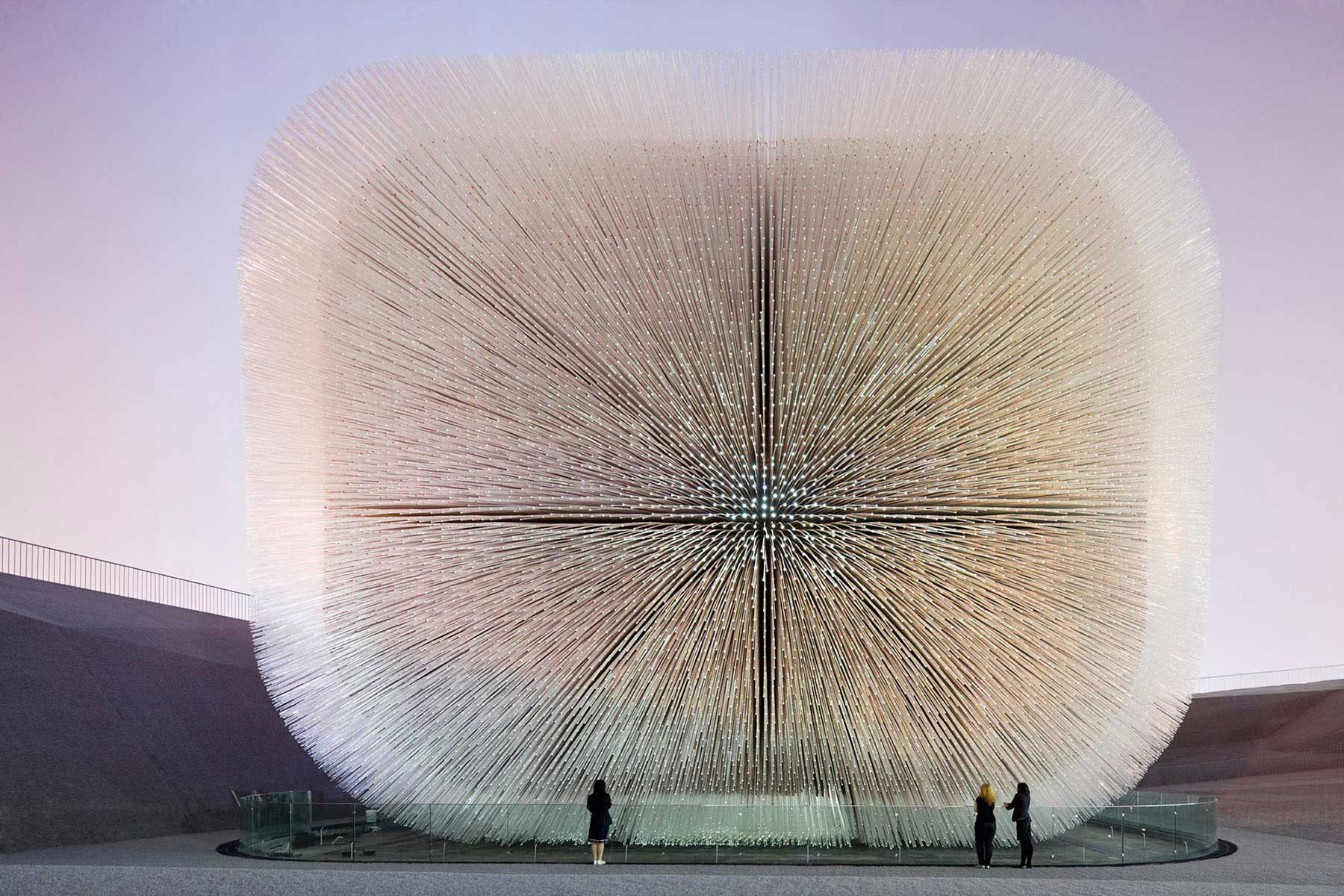
I’ve long been a fan of the British architect, Thomas Heatherwick. I feel he comes from the Foster-born-technology-visible-architecture and takes it so much farther. Often producing functional large scale architecture as art. From his UK pavilion in Shanghai, to his rolling bridge in London.


Or his Vessel in New York.


Visit the studio’s project page for more pictures and videos of the Vessel. All the above images are from the studio’s web site.
And more recently, he completed the new, quite incredible looking Azabudai Hills in Tokyo.


Images © Raquel Diniz (who has an impressive portfolio)
Which is where we have to pause for a moment and take look at Japanese developer Mori and their promotional videos.
The Mori Building Company is a massive Japanese real estate developer that has completed a couple of the most interesting commercial buildings I’ve stepped in. Roppongi Hills and Omotesando Hills. The latter being designed by Tadao Ando. And most recently, the above mentioned Heatherwick designed Azabudai Hills. When I went searching for more information behind some of these projects I came across Mori’s Youtube channel and thus a whole collection of really interesting things to watch. Most of which I can’t understand but it’s video so plenty to feast your eyes on. Or, in the case of one video, be mesmerized by what you’re hearing as you watch it. Take a look:
This is a City Jam video, where percussionist Tomo Yamaguchi will perform a broadcast in the Ark Hills. His personal style along with his intensity is just awesome.
There’s an Artist Introduction to Azabudai Hills by the well known artist, Olafur Eliasson. Which apparently is a series of short videos:
And I especially love this Designing Tokyo video:
The music in this video for 2023 Toranomon Hills is just… confusing. But the storytelling (in English!) is hilarious.
There are a couple more gems, but lets move on to Heatherwick and his Mori project:
And then please feast your eyes on the Green, Life, Tokyo video from Mori explaining Azabudai Hills from their point of view. Again, from some borrowed soundtrack from the past.
So that’s a lot of video stuff. I do actually read as well.
As a parting note, if you’re in Tokyo early next year, the very talented and always interesting TeamLab will be exhibiting to artworks at the Mori Digital Art Museum: Read mori here. (sorry.)
Two small takeaways:
This is a lovely short profile of the fellow who edits the New York Time’s Spelling Bee puzzle. The only puzzle I can do either instantly or not at all.
(Via Kottke.org)
And this interesting piece of science:
Ancient redwoods recover from fire by sprouting 1000-year-old buds.
https://www.science.org/content/article/ancient-redwoods-recover-fire-sprouting-1000-year-old-buds
And if you did get this far, thank you for those who are taking the poll to give me some feedback. I greatly appreciate it.
Cheers, d.